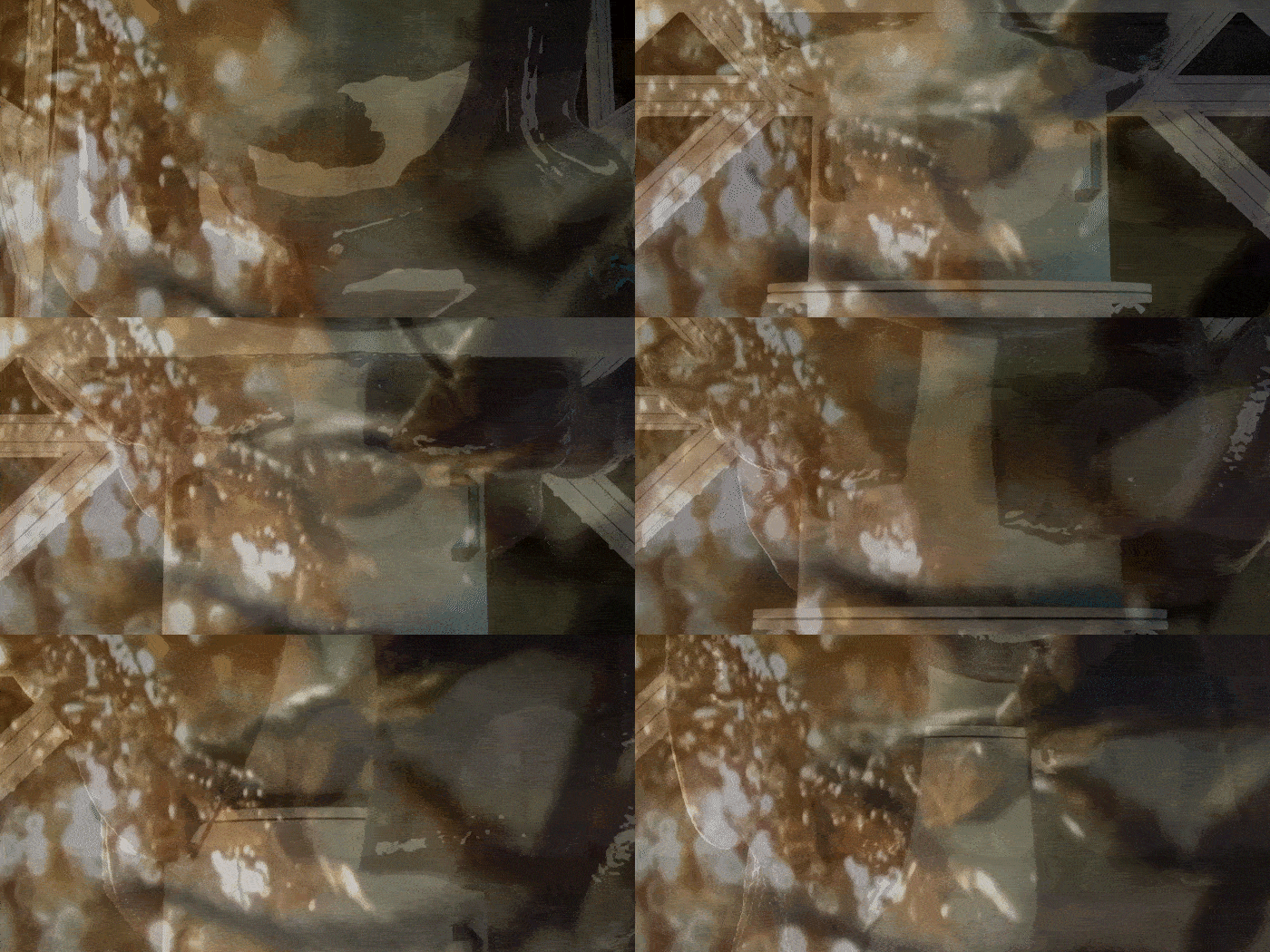
I define genuine quantum computer art as art which utilises the physical phenomena that distinguish quantum computing from digital computing.
These are superposition – where one particle is in two or more contradictory states at once – and entanglement – the nonlocal superposition of all possible ways of connecting at the same time. Quantum computer art should lead to new aesthetics basedon the materiality of the quantum world – the layered, blurry effects of quantum entanglement and superposition.
Genuine quantum computer art cannot be fully representational, because:
– Things we can see with our eyes are not quantum. They do not exist in states of quantum superposition or entanglement. They also do not need superposition or entanglement to represent them. So they cannot form a new quantum aesthetic.
– In his book “Six stories from the end of representation”, art critic James Elkins calls the quantum reality “inconceivable”. When you represent something you can conceive of it.
– Elkins also says that any pictures of quantum “objects” are inadequate representations (so all the art I make with quantum computing shows just traces of the “true” underlying quantum world).
– This is because quantum particles exist as a field of potentiality – waiting to take form – in much higher dimensional states than our macroscopic 3-dimensions plus time.
– Finally, it’s impossible to COPY quantum particles in superposition and entangled states (known as the no-cloning theorem), and copies are required to make representational art.
Therefore genuine quantum computer art cannot be representational, of entities in the macroscopic or microscopic worlds.
Rather, quantum computer art occupies abstract liminal spaces between the binary and non-binary, the digital and the quantum, and the micro- and macro-scales.
Genuine quantum computer art is therefore important as it queers and blurs the boundaries of the existing and becomes a shapeshifting, transformational space where new possibilities can emerge.