Still from Libby Heaney, CephalopodAliens (studies of tentacular creatures with quantum computers), 2019. Courtesy of the artist.
Cephalopod Aliens (studies of tentacular creatures with quantum computing), 2019, single channel video no sound, 1min39.
In 2019, Heaney started working with IBM’s publicly available quantum computers and software Qiskit, creating a series of animations and images exploring what type of aesthetic uniquely quantum phenomena of entanglement and superposition might generate. Heaney works with quantum computing using techniques scientist use to see traces of the quantum world as if collapse had not happened.
Still from Libby Heaney, CephalopodAliens (studies of tentacular creatures with quantum computers), 2019. Courtesy of the artist.
Quantum computers process information very differently to standard digital computers: the computation is non-binary rather than binary 0 or 1s. The computation literally takes place across many parallel realities simultaneously. Each frame in Heaney’s animations are a different parallel reality.
The first frame of the animation of Cephalopod Alien is one of Heaney’s watercolour paintings of a cephalopod suspended in space. The painting was made on a very wet surface so the paint spread out like quantum waves, and magically blended and blurred. Only fixing when it dries, this painting technique partially mirrors quantum processes.
A scan of the watercolour painting was then processed by quantum computing. Through quantum entanglement between the pixels, the pixels of the original image move around the image plane in a (dis)continuous fluid way, mirroring quantum wavelike behaviour.
Cephalopods are both a symbol and metaphor for quantum computing today. Cephalopods evolved separately to mammals and are said to have an alien like intelligence as two thirds of their brain is delocalised in their arms. In human culture octopuses have often symbolized powerful and manipulative organisations as well as eroticism and desire.
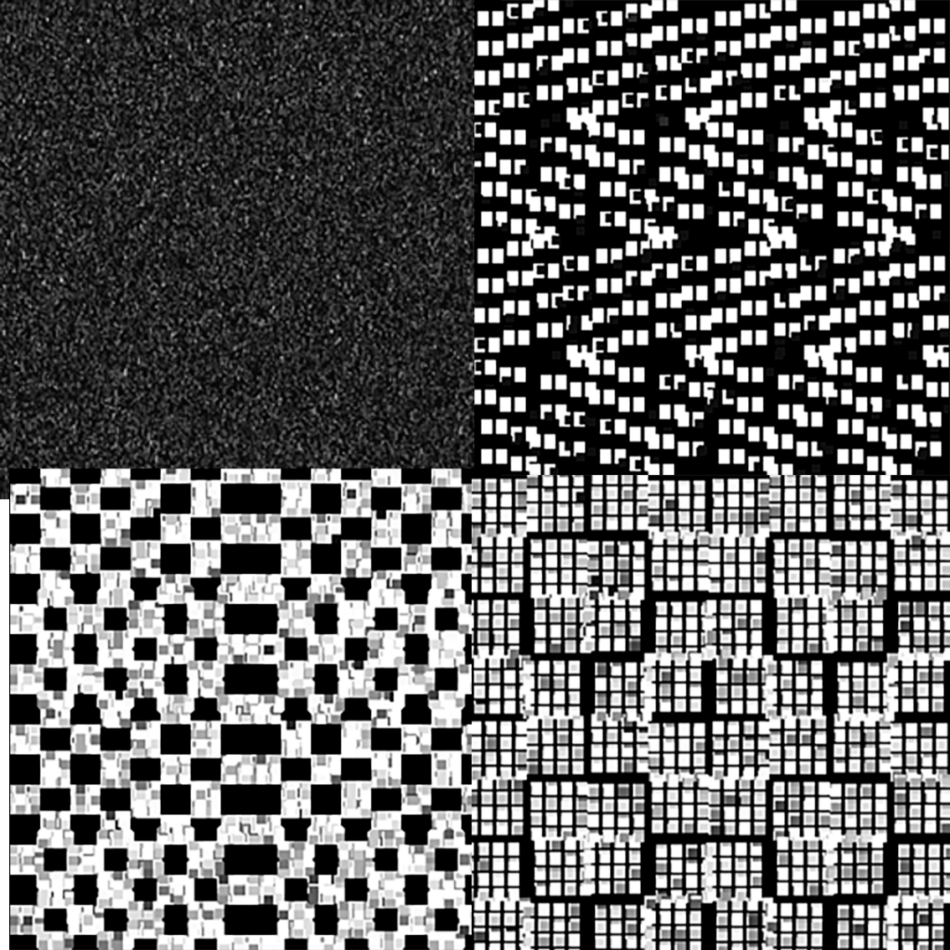
Images from selected animation studies of Quantum Native Images, 2019, asking what type of images or patterns exist within different types of entangled states of 15 qubits. Courtesy of the artist.
In her Quantum Native Image studies, 2019, Heaney explored what types of patterns exist naturally within quantum entangled states of 15 qubits. While this was a purely aesthetic and ontological investigation, Heaney subsequently used this data in other artworks such as Ent-, 2022.