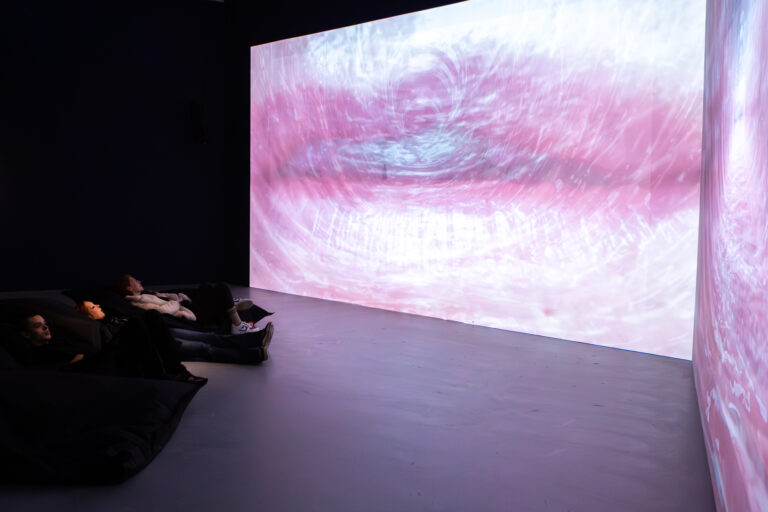
Quantum Feeling: Our Bodies and Quantum Aesthetics
In this piece, I discuss the concept of quantum feeling – experiencing overlapping realities and emotions at once, without flattening them. I reflect on the research I have done as an artist working with quantum computing and what I have learned from other sources about consciousness and perception.
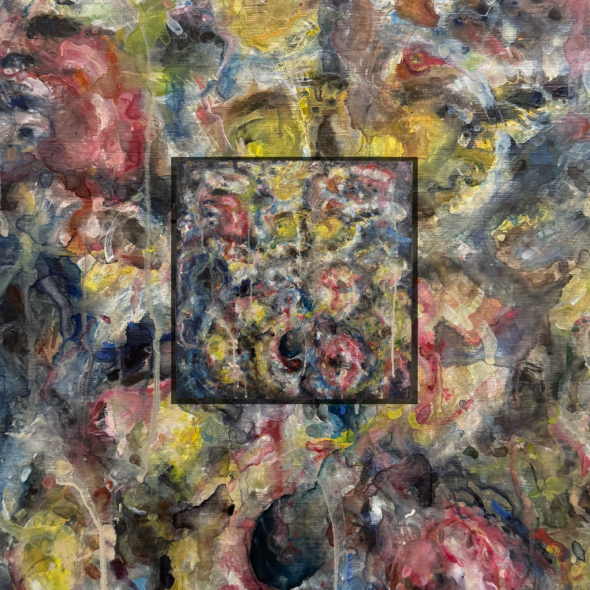
HUNCH HUNCH (moving through), 2026, watercolour and varnish on wooden board, 40x40cm.
Potential installation mock up.
As I write this, the early spring sunlight is glistening through my window, its lemon light gently touching the corner of my bed and bouncing off some blue glitter curtains I still haven’t taken down from a party last year. I smile as I receive a voice note from a dear friend celebrating her successful pitch for a freelance job with a well-known brand.
Today has been fun. I’ve been working on the video aspects of my Sainsbury Centre commission – filming pieces of fruit touching erotically, generating AI video clips of strange amorphous bodies gently caressing and merging.
I feel light in my heart, hopeful and alert.
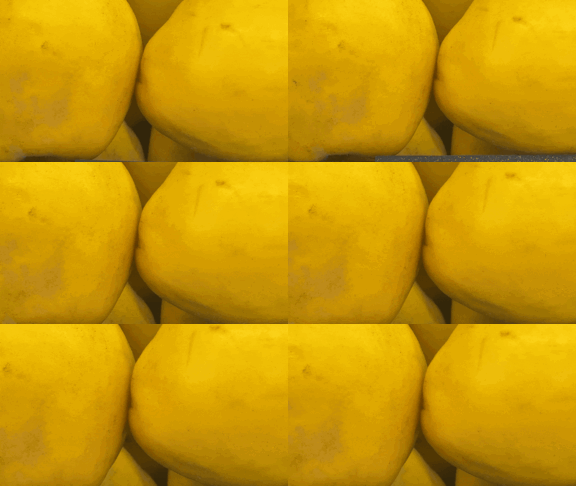
GIF of work in progress video work for Life in the Multiverse, Sainsbury’s Centre, Norwich.
A quick hop on Instagram reveals nuggets of the atrocities in the Middle East and a reminder of a lovely person in my yoga community who died suddenly. Another voice note from a close friend reminds me that she is very poorly. I feel a tug of helplessness. My face drops and there’s a heaviness in my belly and heart.
I put my laptop aside. I sit and breathe and be with these feelings. I can feel them all at once. Have you tried this? Becoming intensely aware of all the feelings and sensations in your body without collapsing them into stories or narratives. Different moods, colours and vibrations of thought, dancing with the regularity of your breath.
To ground my research, I’m currently reading A World Appears: A Journey into Consciousness by Michael Pollan. He describes how brains evolved to help the body survive and how consciousness first and foremost developed to make us aware of the bodily feelings that supported that survival: hunger, fear, pleasure, joy. Consciousness begins in sensation. It is a way for the body to register the world and its own internal states, allowing us to navigate reality through feeling as much as through thought. Indigenous cultures still practice this.
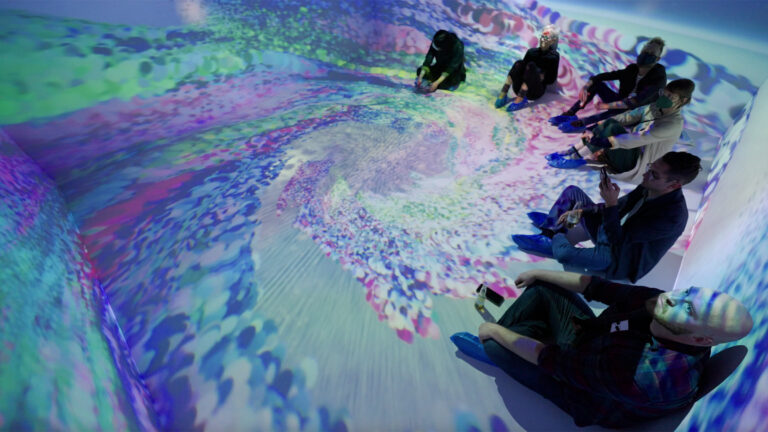
Ent- (2022), installation view of The evolution of Ent-: QX, arebyte Gallery, London, 2022. Photo: Max Colson
These embodied ways of knowing suggest a world already layered with sensation and perception. Adjacently, quantum physics proposes a completely different, yet similarly layered, multiplicity inherent to the physical world. In my practice, I’m interested in quantum-only ontologies where the classical (macroscopic, stable, boundaried) world never emerges.
In such ontologies, individual systems can exist in multiple contradictory states simultaneously. Within these layered realities, particles become entangled with one another, behaving as one across vast distances.
Encountering ideas around layered forms of being as someone trained in science has been deeply personal. As a recovered scientist, I value my body and emotions more than anything. Years spent in scientific training privileged abstraction, logic and explanation, which never sat right with me. My deepest forms of knowing often arrive through sensation first. As artists we feel our way through things: our bodies understand before language catches up.
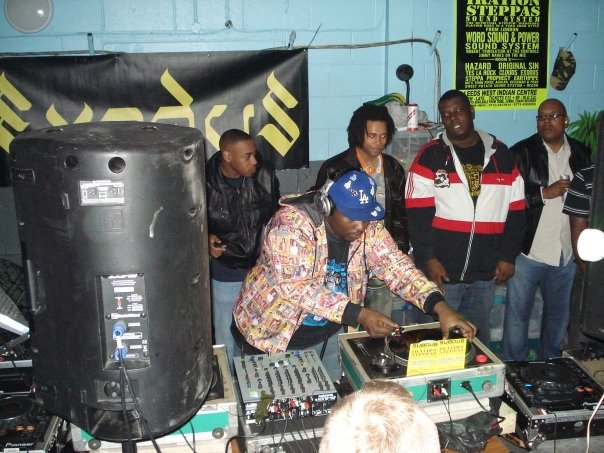
My photo from the iconic Subdub, West Indian Centre, Leeds around 2008.
I’ve always danced to feel free and connected.
Yesterday I went dancing at Unfold – a queer party at Fold nightclub in East London – as a way to live, be, process, express and connect away from rational thought. I’ve written about dancing before: how it becomes a form of distributed awareness. Yummy basslines and bodies intertwine. Perception expands beyond the boundaries of the self. It is a reminder that consciousness is physical, social and atmospheric, not just located in our tiny pre-frontal cortices.
Intellectual thought has been privileged since Descartes and still profoundly shapes how many Western cultures understand the world. The brain imagined as a computer continues to dominate theories of mind. Yet consciousness seems far too entangled with bodies, environments, sensations and relationships to be reduced to computation alone.
Similarly, I’ve argued in past editions of this newsletter that art made with quantum-only ontologies is experiential, non-representational and tends toward abstraction. Rather than asking what such aesthetics intellectually means, I ask what it might feel like to inhabit such a world.
I call this quantum feeling.