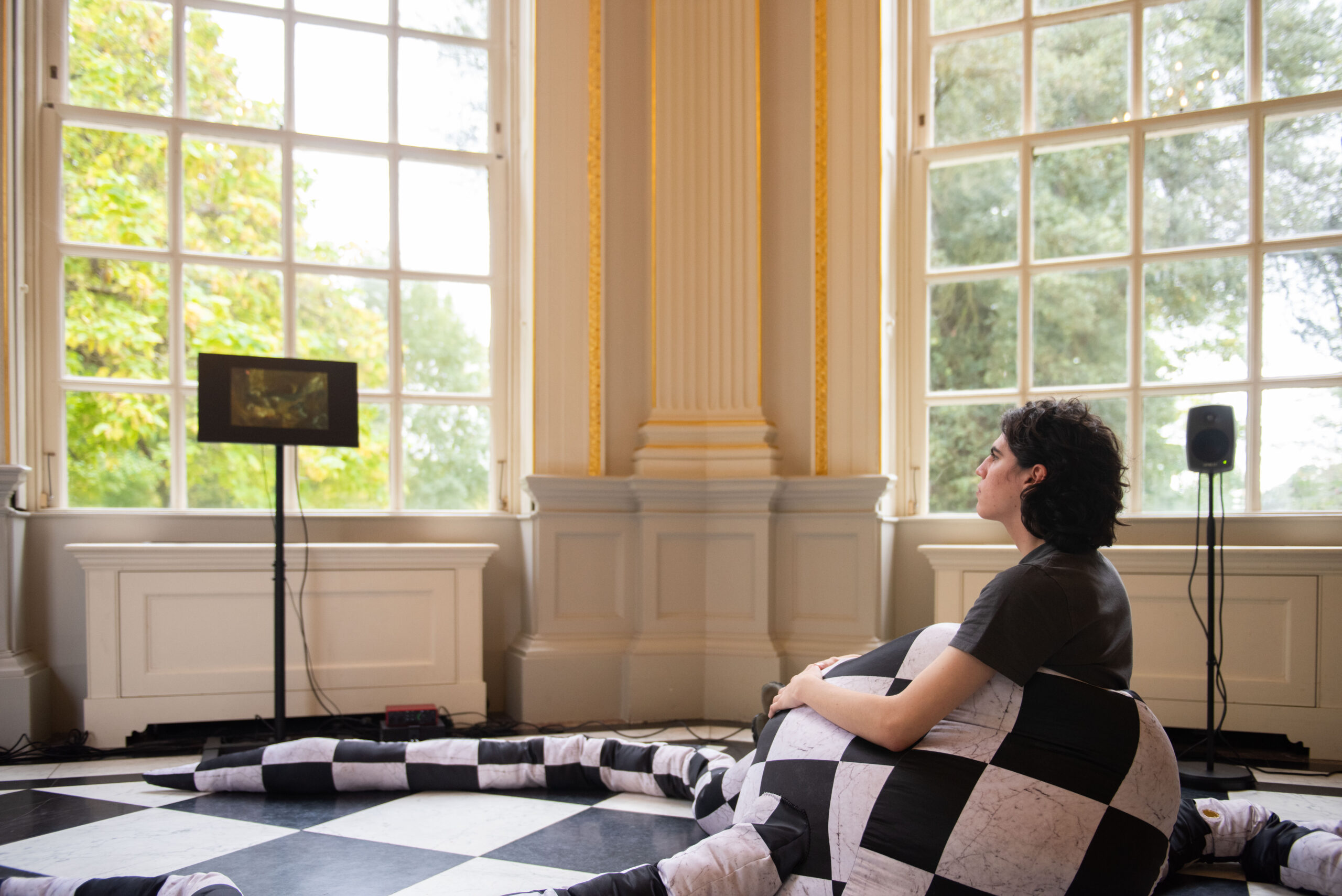
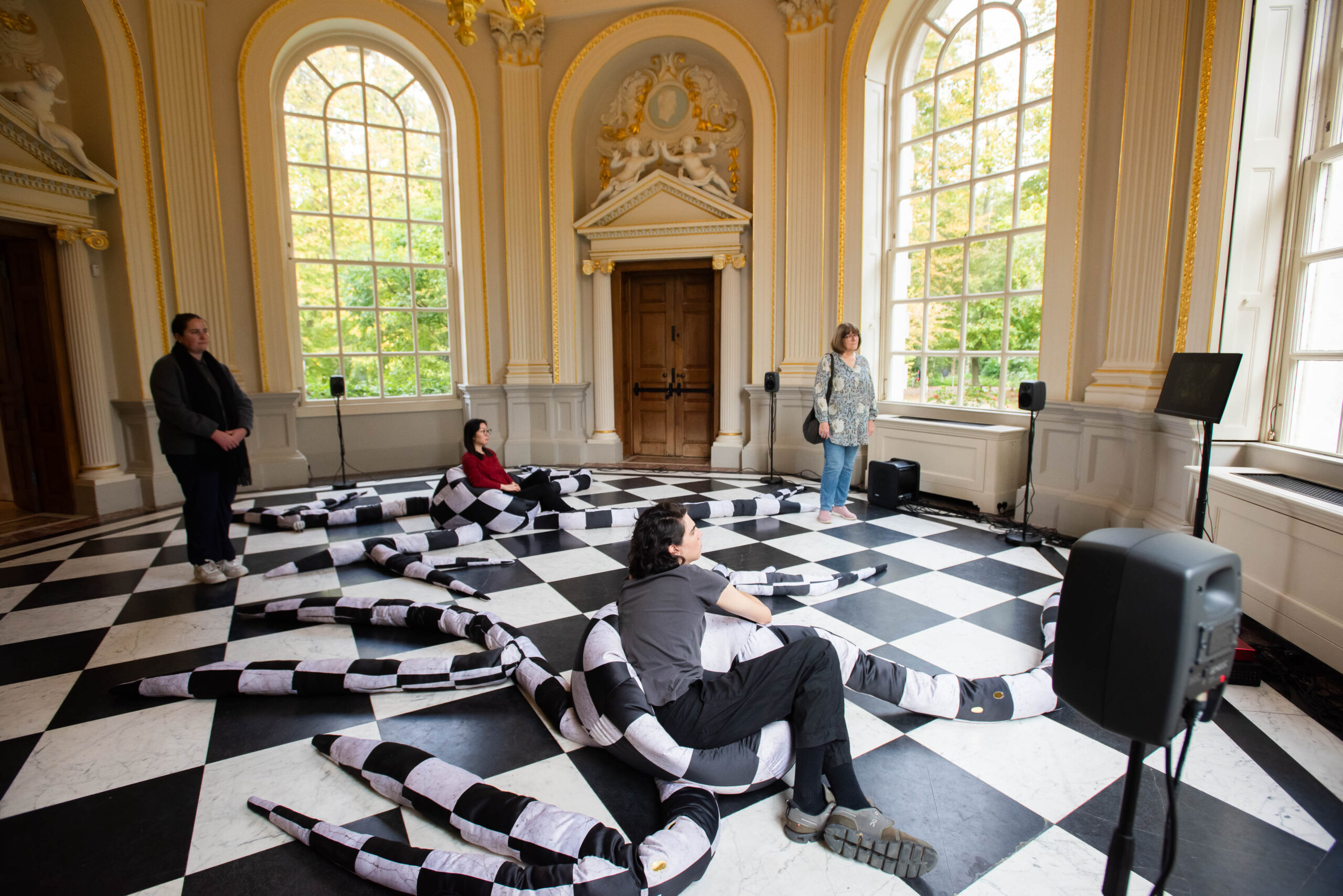
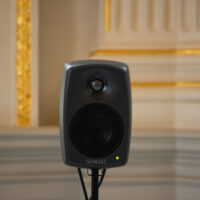
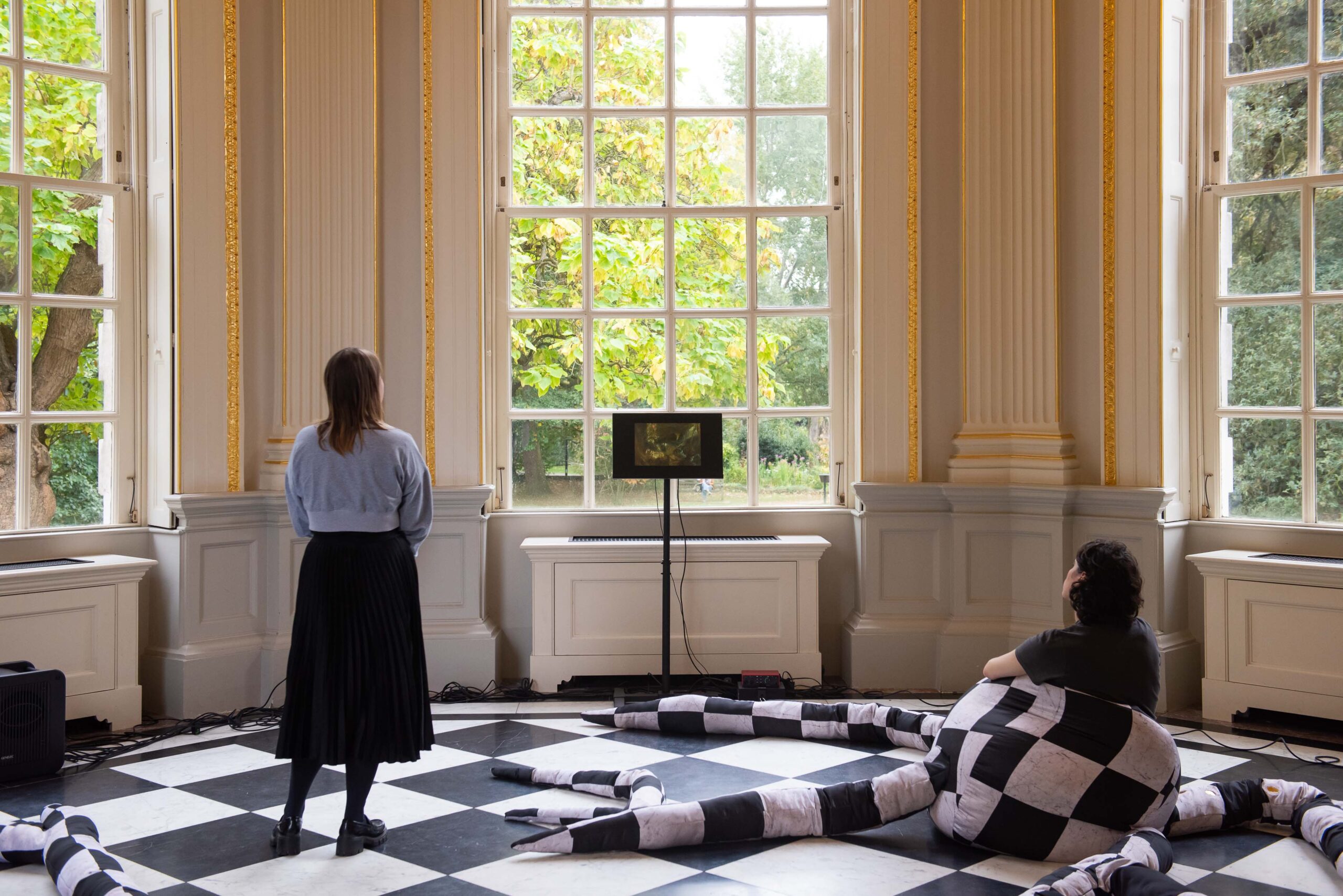
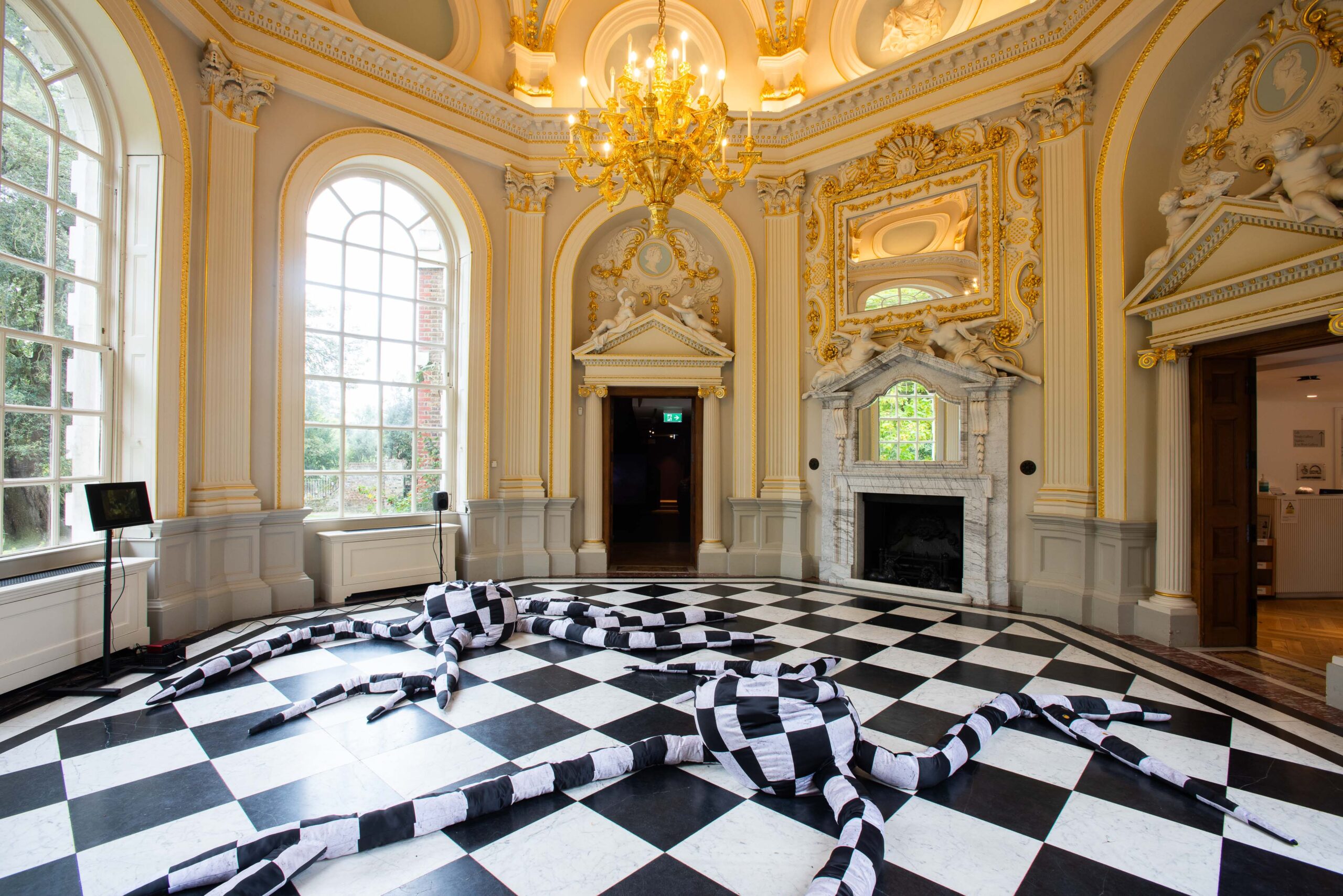
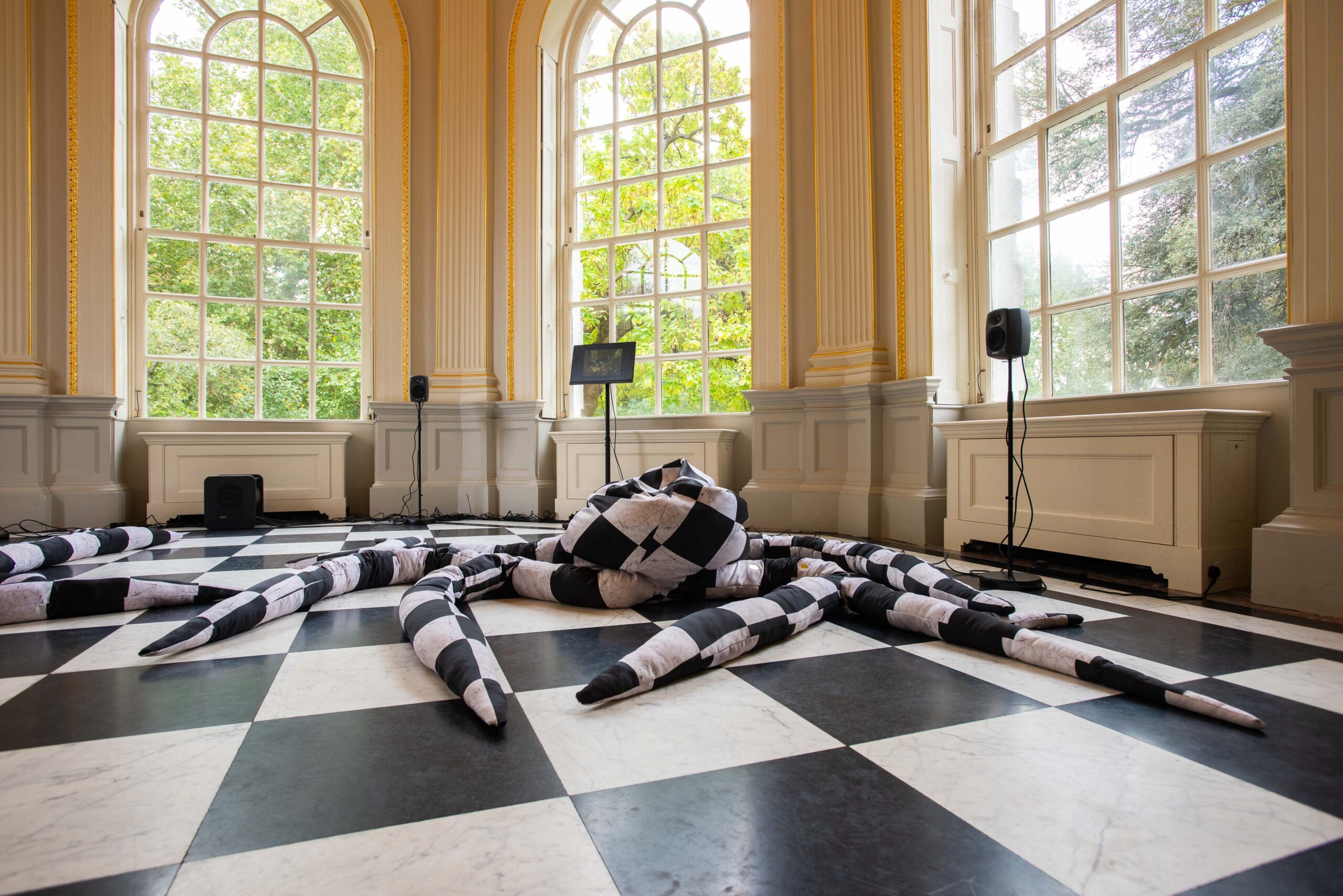
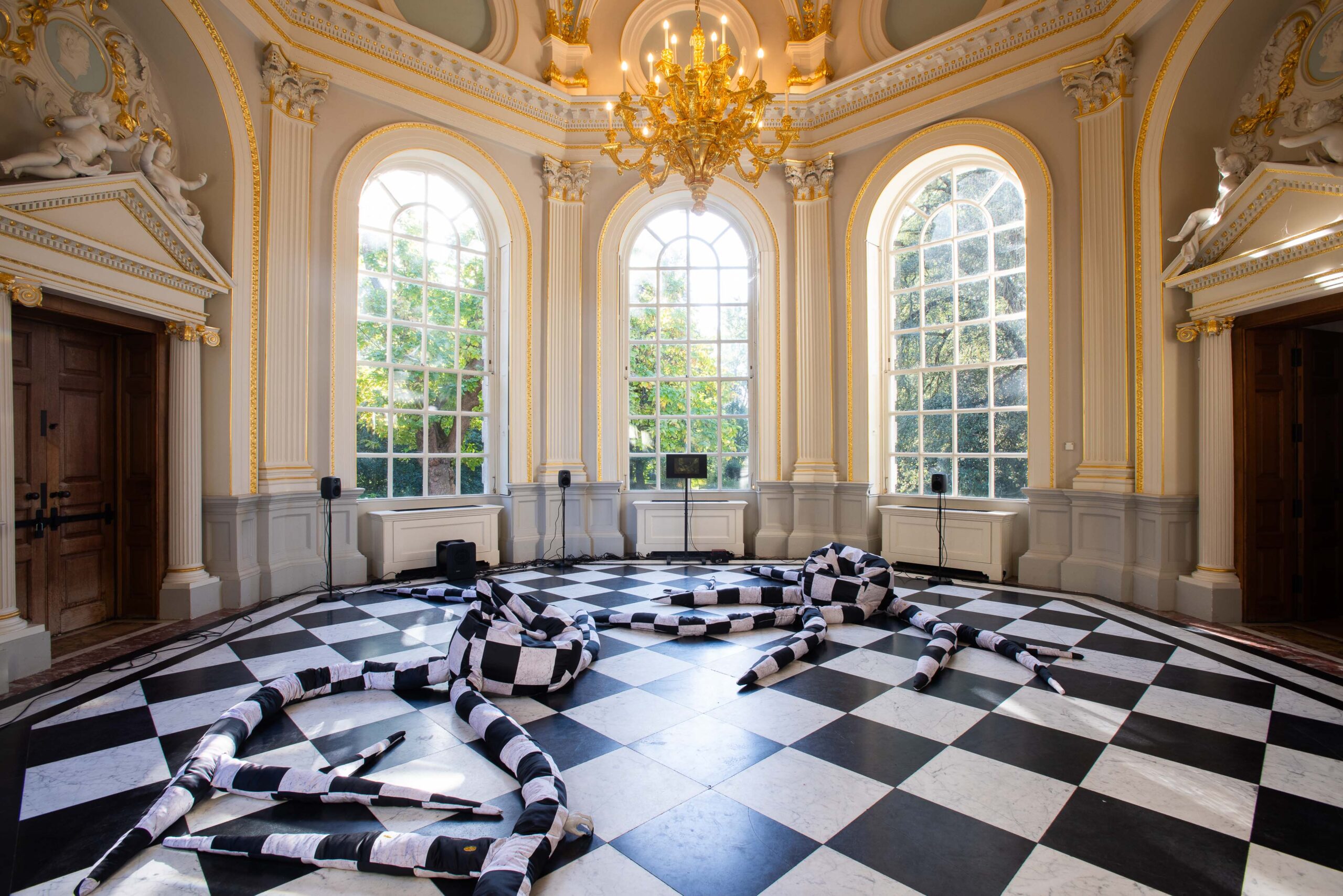
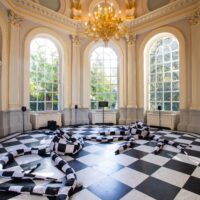
Libby Heaney, Shadowscapes (Wilderness Within), 2025. Installation view: Orleans House Gallery, 2025. Photo Max Colson.
Shadowscapes (Wilderness Within), 2025, generative, interactive four channel sound installation with quantum computing, infinite time
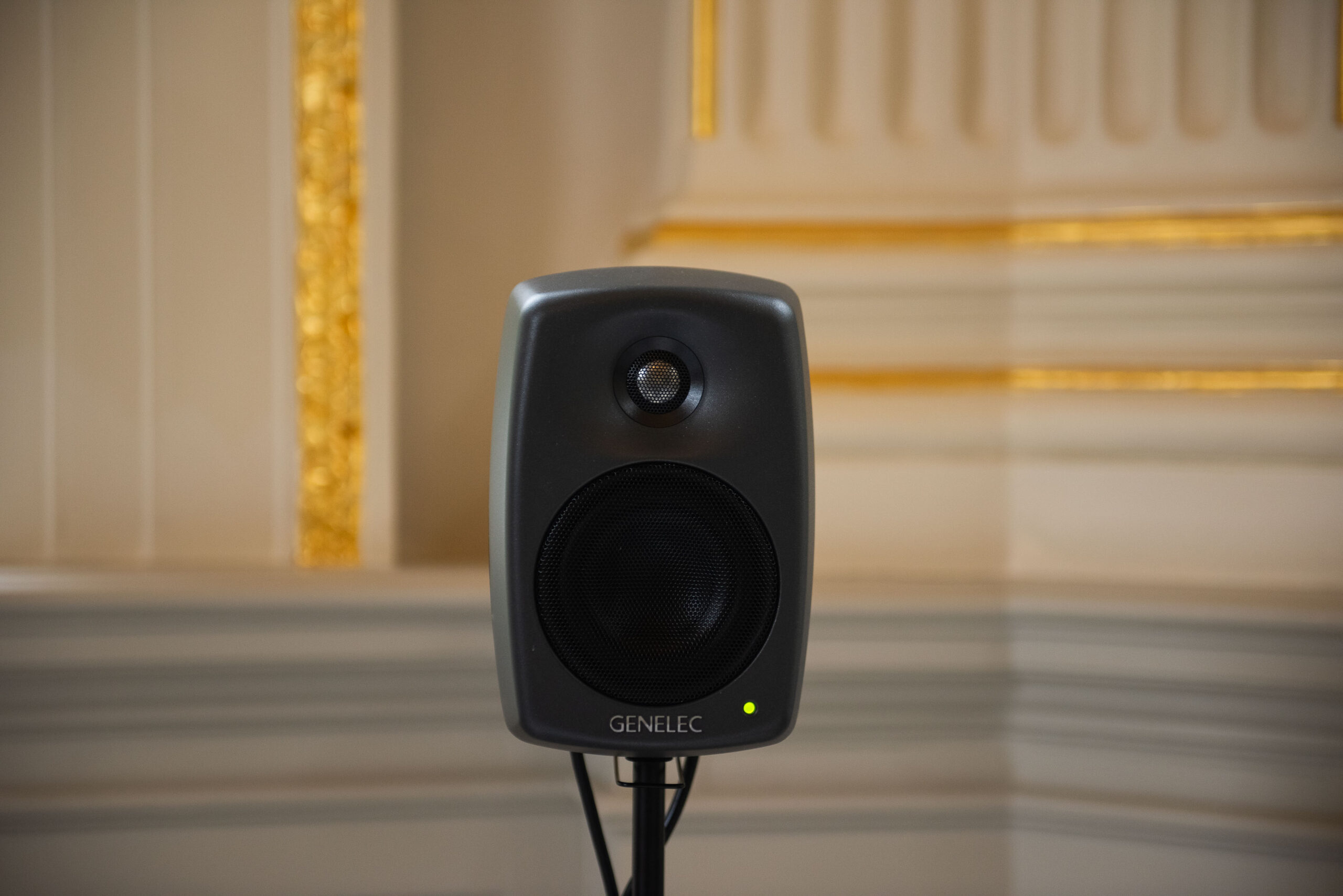
Shadowscapes (Wilderness Within) is a generative, interactive four-channel sound installation that operates as a self-playing instrument. The work unfolds continuously in infinite time, producing a soundscape that is never the same twice.
The installation draws together Carl Jung’s concept of the shadow, understood here as what remains unintegrated, unseen or indirectly encountered, with quantum physics, where systems cannot be fully observed without being altered. In both cases, knowledge emerges relationally, through interference rather than direct access.
The resulting sound environment is an evolving, layered mix in which human, natural and machinic elements entangle. Tones, melodies, fragmented voices, rhythms and synthetic textures circulate across four channels, forming a spatial sound field that resists narrative resolution. The work continues Heaney’s long-term exploration of the self as distributed, non-bounded and fundamentally entangled with others and with its environment.
Heaney wrote custom software that generates and processes sound using data derived from digital images and multi-qubit quantum entanglement from IBM’s publicly accessible quantum computers. In this process, quantum computation expands flat images into dynamic, multi-dimensional sonic structures, revealing latent possibilities and shaping how sound moves through space.
Shadowscapes (Wilderness Within), 2025, detail of exhibition design. Installation view: Orleans House Gallery, Twickenham, 2025.
Shadowscapes (Wilderness Within), 2025, detail of exhibition design. Installation view: Orleans House Gallery, Twickenham, 2025. Photo Max Colson.
Shadowscapes (Wilderness Within), 2025, detail of exhibition design. Installation view: Orleans House Gallery, Twickenham, 2025. Photo Max Colson.
Shadowscapes (Wilderness Within), 2025, detail of exhibition design. Installation view: Orleans House Gallery, Twickenham, 2025. Photo Max Colson.
Shadowscapes (Wilderness Within), 2025, detail of exhibition design. Installation view: Orleans House Gallery, Twickenham, 2025. Photo Max Colson.
Shadowscapes (Wilderness Within), 2025, detail of exhibition design. Installation view: Orleans House Gallery, Twickenham, 2025. Photo Max Colson.
Shadowscapes (Wilderness Within), 2025, detail of exhibition design. Installation view: Orleans House Gallery, Twickenham, 2025. Photo Max Colson.
Shadowscapes (Wilderness Within), 2025, detail of exhibition design. Installation view: Orleans House Gallery, Twickenham, 2025. Photo Max Colson.
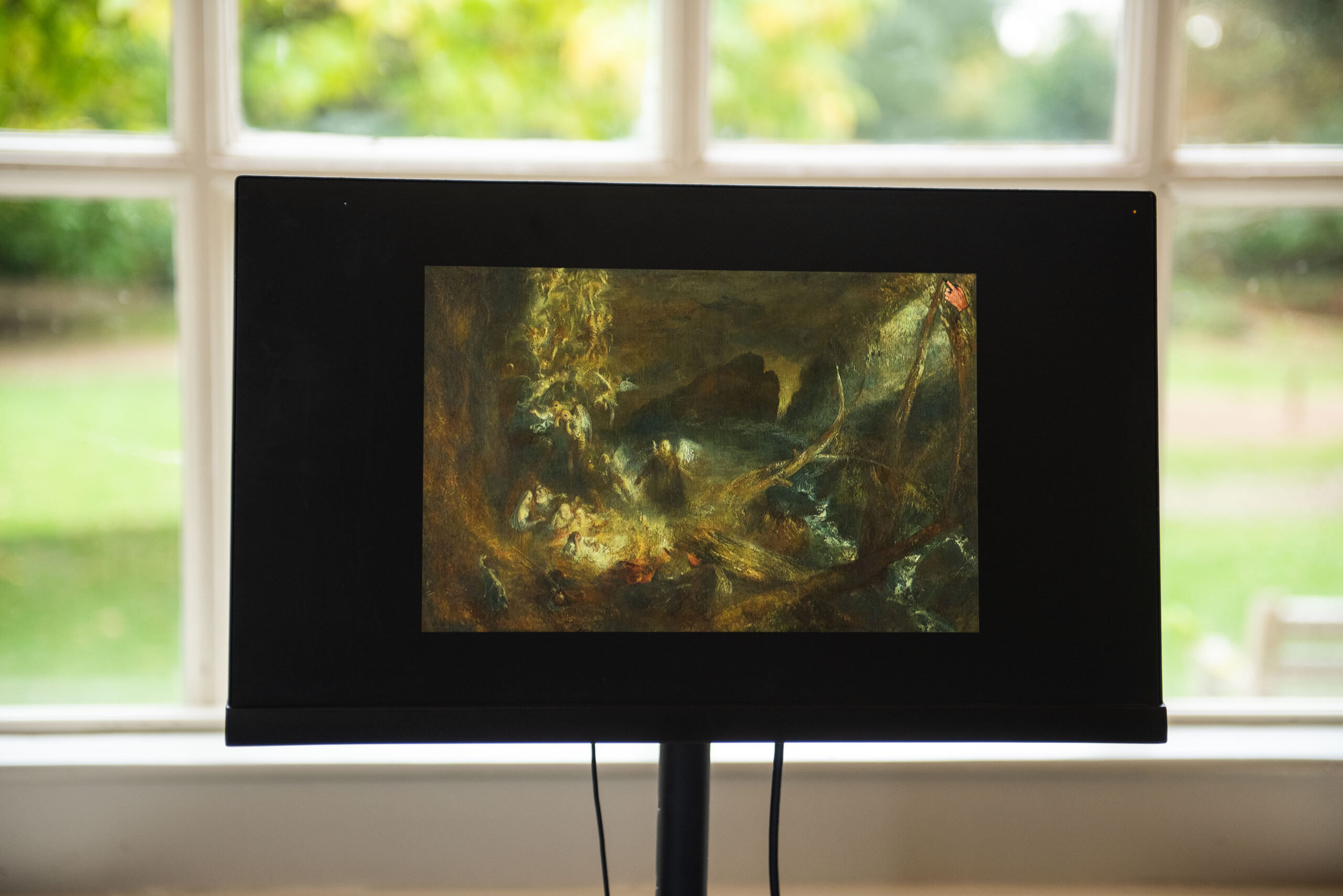
While the system can operate with any image or sound material, Shadowscapes (Wilderness Within) focuses on three paintings by J. M. W. Turner, The Vision of Jacob’s Ladder (c.1830), The Hero of a Hundred Fights (1847), and Rocky Bay with Figures (1828), which were also presented in Heaney’s wider exhibition at Orleans House Gallery. Turner’s treatment of light, instability and invisible forces informed reflections on belief systems, technology and nature as atmospheric rather than representational conditions.
Sound material includes processed recordings of Heaney and collaborators speaking, vocalisations, percussive rhythms, AI-generated audio and sounds synthesised through quantum computation. These elements are automatically triggered, sequenced, pitched and spatialised by the code, following non-classical, wave-like patterns derived from quantum entanglement. Close listening reveals shifting relations rather than repeating structures.
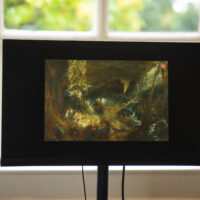
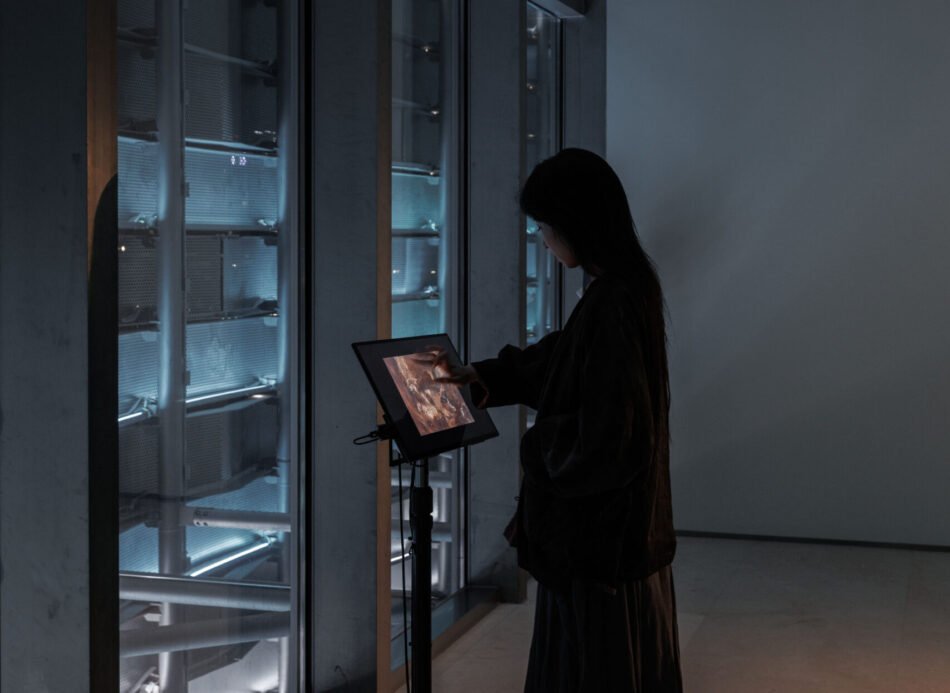
The installation is interactive via a touchscreen interface. A digital rendering of Heaney’s hand, reminiscent of a record player’s needle, moves pixel by pixel across an image, indicating the region currently being translated into sound. When viewers touch the screen, the hand relocates, prompting the system to recompose the soundscape in real time.
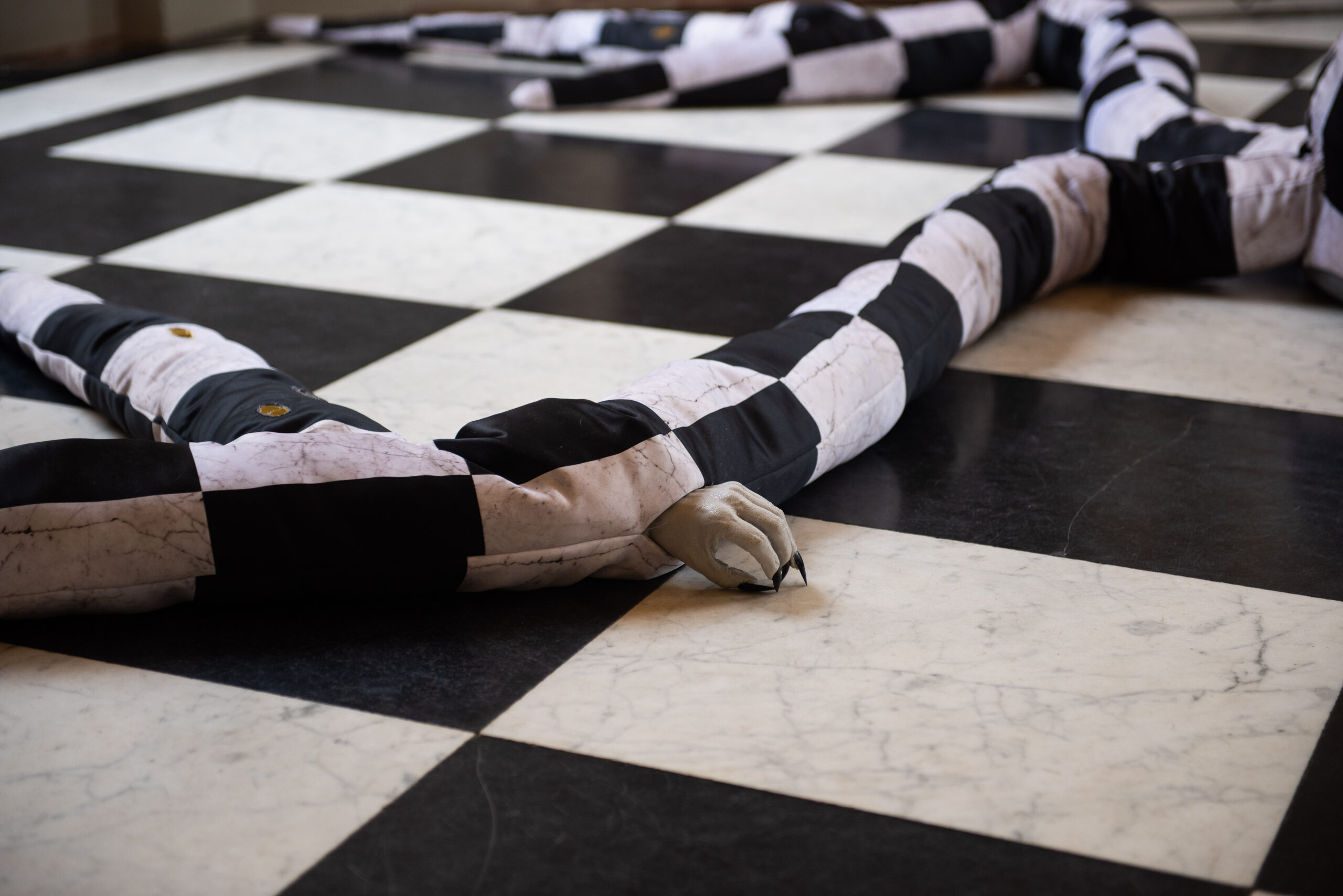
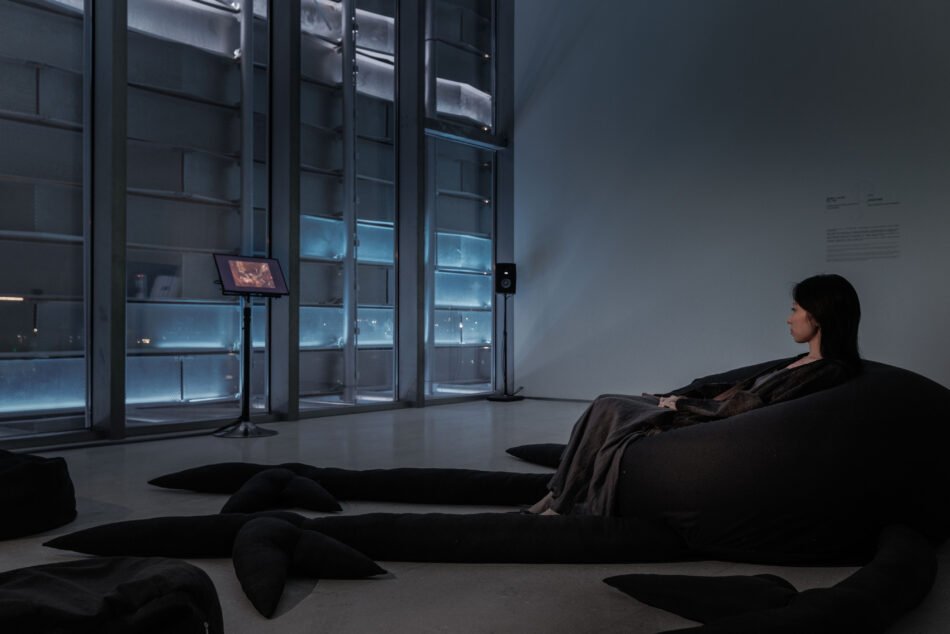
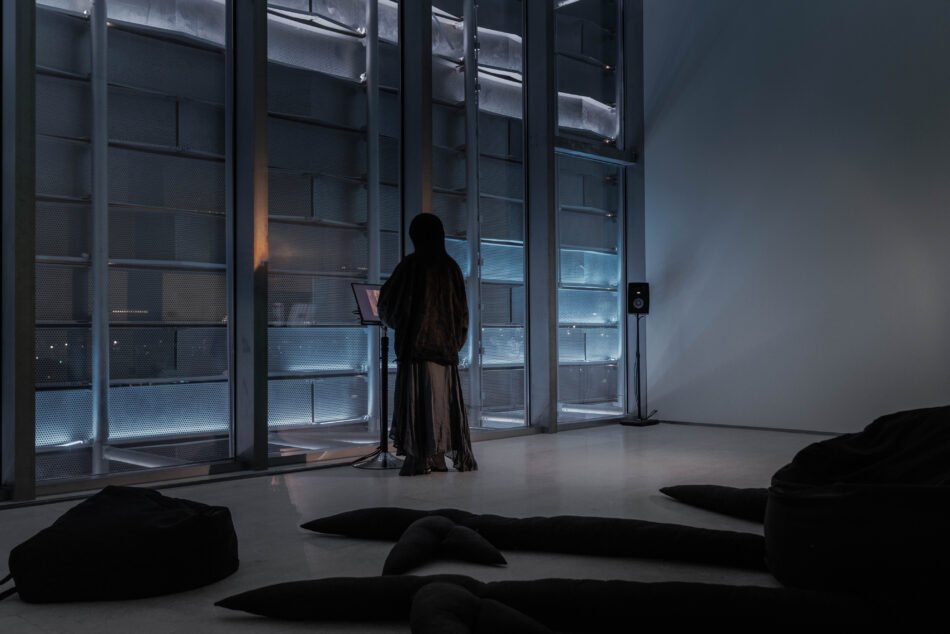
Two site-specific soft sculptural seats accompany the work, encouraging prolonged listening. Resembling hybrid forms, part branch, part tentacle, the seats are upholstered with fabric printed with altered images of the gallery floor. A grey silicone cast of Heaney’s hand with elongated black nails emerges from one form, subtly extending the interface between body, object and system.
Shadowscapes (Wilderness Within) stages an encounter with instability. The work invites listeners to remain with ambiguity, to experience a living sonic field in which observation, participation and transformation are inseparable and where subject and environment cannot be cleanly divided.
Installation view: Libby Heaney, Shadowscapes (Wilderness Within), 2025. Shenzhen Art and Tech Biennale, Shenzhen International Museum of Art, Shenzhen, May 2026 - February 2027. Photo: SATB.
Installation view: Libby Heaney, Shadowscapes (Wilderness Within), 2025. Shenzhen Art and Tech Biennale, Shenzhen International Museum of Art, Shenzhen, May 2026 - February 2027. Photo: SATB.
Installation view: Libby Heaney, Shadowscapes (Wilderness Within), 2025. Shenzhen Art and Tech Biennale, Shenzhen International Museum of Art, Shenzhen, May 2026 - February 2027. Photo: SATB.
RELATED WORKS
If you enjoyed Shadowscapes (Wilderness Within), you may also like: